

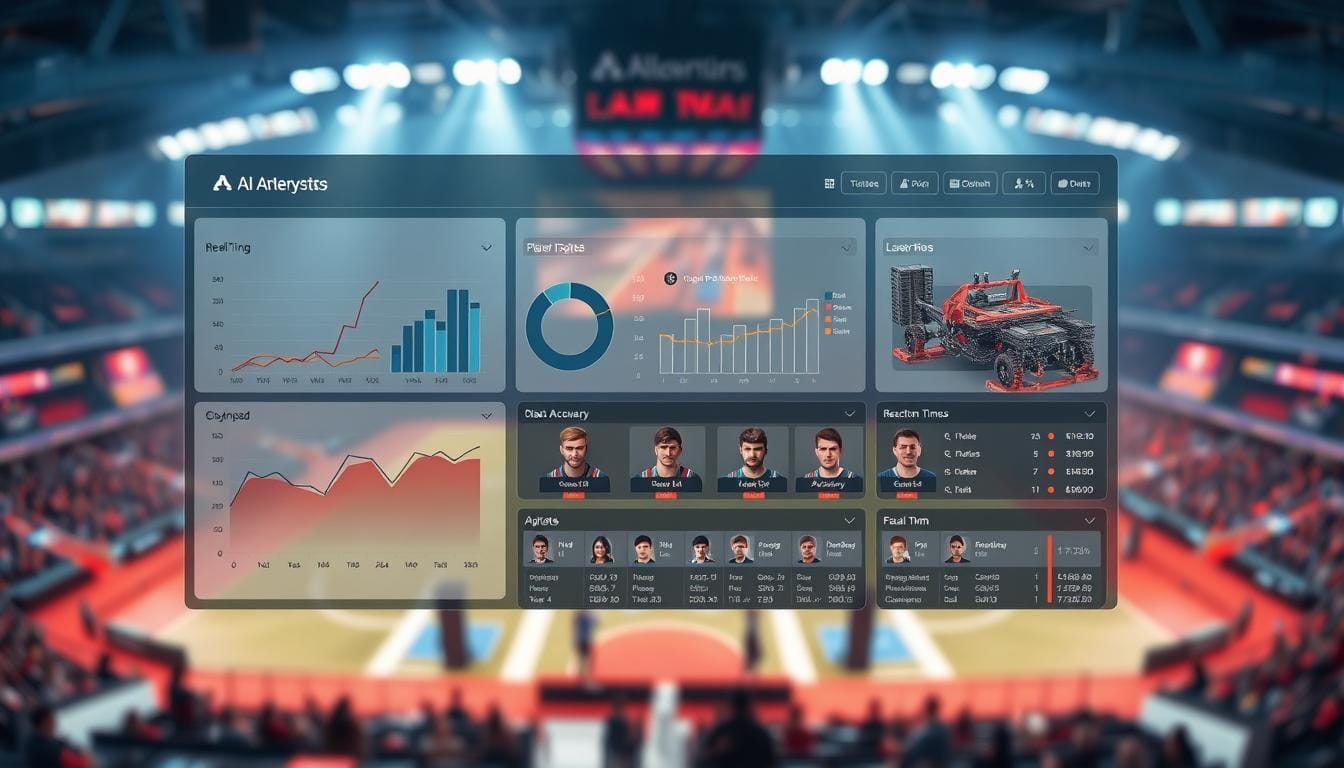
Here’s one stat that changed how I train: injury costs in top European football jumped from €553.62M to €704.89M in 2022–23, and that gap makes smart use of data non-negotiable.
I use tech from tracking systems and video tools—think Second Spectrum, SkillCorner, and motion tracking—to turn raw feeds into clear cues I can act on during streams or scrims.
My approach blends real-world experience with intelligence-driven analytics. I focus only on metrics that map to timing, positioning, and resource choices that win rounds.

On Twitch and YouTube, I show how wearables, VODs, and simple dashboards feed my training cycles. The goal is to make data useful, not overwhelming.
Key Takeaways
- I translate tracking feeds and VODs into playable cues you can use live.
- Tools like optical tracking and supervised models help flag injury and workload risk.
- I prioritize metrics that affect timing, positioning, and cooldowns.
- Training and review cycles must feed each other for consistent gains.
- Follow my streams on Twitch and YouTube to see these methods in action.
Why I’m Obsessed with AI in Sports and Gaming Right Now
What hooks me is how real-time systems compress hours of review into minutes of clear, repeatable training.
I lean into artificial intelligence because the creator economy runs on fast insights. I can record a session, pull meaningful data, and publish clips that teach within the same day.

Current momentum comes from live tracking, auto video breakdowns, and instant overlays. These tools move feedback from days to minutes, which changes how I plan practice and streams.
Here’s what you’ll learn: which analysis layers matter, the tools I trust, and how to keep setups light while boosting results.
| Metric | Now | Impact |
|---|---|---|
| Market growth (2032) | $29.7B (~30% CAGR) | More tools, faster development |
| Tracking systems CAGR | ~25% | Better low-latency feeds |
| Predictive accuracy | >60% | More reliable match forecasts |
| Wearable impact | ~30% fewer injuries | Safer training load |
- I cut the time-to-insight so the next game reflects fresh learning.
- Workflows scale from solo queue to organized squads without bloat.
- Connect with me on Twitch (twitch.tv/phatryda) and YouTube (Phatryda Gaming); I post highlights on TikTok (@xxphatrydaxx) and builds on Facebook (Phatryda).
What ai-based player performance analysis Really Means
I focus on signals that move the needle—small data points that change practice the same day.

In sports, big data now spans wearables, physiological sensors, and match logs. Those streams feed models that sort what matters from noise.
From big data to deep learning: translating raw data points into valuable insights
When I say performance analysis, I mean turning video, tracking, and telemetry into clear cues that change how I train and play.
I use machine learning and deep nets for tasks like pose estimation and video tagging. LLMs help summarize commentary and guide content edits.
Systems, sensors, and devices: the tech stack behind modern analytics
My stack mirrors sports science: ingestion systems, classification algorithms, and dashboards that show one or two actionable metrics.
I rely on devices that capture motion, timing, and stress so I can tell if a slump is mechanical, tactical, or fatigue-related.
- Keep metrics tight: map each metric to a drill or in-game check.
- Let machines flag trends; I validate with VOD and scrim feedback.
- Follow my breakdowns on YouTube (Phatryda Gaming) and ask questions live on player behavior tracking or Twitch.
| Component | Role | Example |
|---|---|---|
| Wearables | External & internal load | Heart rate, acceleration |
| Computer vision | Movement markers | OpenPose 2D/3D pose |
| Models & dashboards | Classify, predict, inform drills | Session trends, alerts |
Load Optimization and Injury Prevention with Artificial Intelligence
I learned to treat workload like a dial, not a guess—so I can push when safe and rest when needed.
My approach uses models that adapt training to how my body actually responds. Zone7-style tools compare workload histories and injury records to estimate short-term risk.
Personalized training programs: models that adapt to individual athletes
I tailor training programs using adaptive models that adjust intensity, volume, and drill selection based on session data. This keeps fatigue in check and sharpens execution.
Predictive analytics: spotting injuries before they happen
Predictive analytics flag workload spikes and technique drift early. When sensors and systems show subtle changes, I downshift and correct form before small issues become injuries.
Return-to-play and recovery: VR, motion tracking, and smart adjustments
My return-to-play checklist uses VR aim and timing modules plus OpenPose-like motion tracking to validate form. Reinforcement learning can tailor progressions so recovery stays safe and targeted.
Evidence from the field: reduced injuries and better time-to-recovery
Field evidence matters. European football injury costs jumped nearly 30% in 2022–23, which shows why prevention matters.
Proactive load tuning shortens time-to-recovery and reduces repeat setbacks. I share these personalized training and recovery routines live on my training page, Twitch (twitch.tv/phatryda), and YouTube (Phatryda Gaming).
| Method | What it tracks | Benefit |
|---|---|---|
| Workload models (Zone7) | Session load, history, injury logs | Risk estimates; proactive load tuning |
| Motion tracking (OpenPose) | Joint positions, technique drift | Real-time form corrections |
| VR/AR rehab | Aim, timing, engagement metrics | Safer, more precise return-to-play |
| Sensors & systems | Heart rate, acceleration, mechanics | Early flags; targeted low-impact drills |
- My rules: time-bounded sessions, structured deloads, and data-guided rest days.
- When numbers disagree with willpower, I choose recovery—it’s faster than rehabbing an avoidable injury.
From Video to Insights: Performance, Tactics, and Real-Time Adjustments
I turn match footage and tracking traces into crisp cues that change decisions in real time.
Optical tracking and computer vision let me map movement and ball paths into concrete metrics. Systems like Second Spectrum and SkillCorner capture trajectories used at the FIFA World Cup and NBA broadcasts. That data produces external load, tactical flags, and technical indicators I can act on.
Optical tracking: turning movement into metrics
I extract heat maps, timing lags, and angle control scores so aim steadiness and spacing become teachable drills. These metrics move from camera feed to my drill queue within hours.
In-game strategy: ghosting, simulations, and reinforcement learning
I run lightweight ghosting sims—like the Raptors’ defensive models—to preview pushes and holds. Models and algorithms test “what ifs” so I refine tactics without risking rank.
Scouting and talent identification
For scouting I build objective profiles: reaction consistency, clutch trends, and map roles. That helps predict fit and impact across sports and game titles.
- Loop: review, simulate, select, execute.
- I post breakdown clips on YouTube (Phatryda Gaming) and live-review VODs on Twitch (twitch.tv/phatryda). Follow TikTok (@xxphatrydaxx) for quick insights.
Health Beyond the Arena: Sleep, Off-Training Behavior, and Recovery
Travel nights and late matches erode clarity; I fight that with data and routines. Adequate sleep drives energy recovery and cleaner decision-making, so I treat nights like a training block.
AI-powered sleep quality insights
I use wearables and smart apps to log sleep stages, latency, and disruptions. Those devices and sensors feed machine summaries that link short sleep to drops in reaction and judgment.
On stream I discuss these trends and show trackers I use on Facebook (Phatryda). When sleep falls, I lower scrim intensity and focus on VOD review instead of grinding.
Off-training movement and smart nudges
Sedentary time hurts aim and posture. Small breaks—2 to 3 per hour—keep circulation up and reduce stiffness.
- I treat sleep like training: AI flags sleep debt so I don’t mistake fatigue for form issues.
- I track recovery trends over time to taper before big sessions and avoid stacking late-night streams.
- Smart nudges from apps and assistants prompt mobility, which aids prevention and steadier performance.
| Focus | What it tracks | Benefit |
|---|---|---|
| Sleep | Stages, latency, disruptions | Better reaction, decision clarity |
| Off-training movement | Sedentary time, breaks | Less stiffness, steady aim |
| Recovery trends | Session load, sleep debt | Smarter tapering, fewer setbacks |
Small prevention steps compound: steadier energy, cleaner mechanics, and fewer days lost. I use these insights so I can push when it counts and rest when it matters.
My Workflow: How I Use AI Tools to Analyze Player and Team Patterns
My workflow starts with tidy inputs so the rest of the stack can act fast and reliably.

Data capture: wearables, video, and tracking systems
I collect synced video, sensor logs, and tracking overlays from tools like WIMU SVIVO and Second Spectrum. Clean timestamps and consistent labels let me trust the data before I model it.
Models and algorithms: supervised, unsupervised, and time-series methods
I keep the machine learning mix simple. Supervised models predict likely dips. Unsupervised clustering surfaces hidden patterns. Time-series methods flag momentum shifts across sessions.
Dashboards and alerts: coaching signals I actually act on
The algorithms feed a compact dashboard. If a metric does not map to a coaching action, I remove it. Alerts trigger on thresholds—late rotations, over-aiming, or wasted resources—so fixes happen the same day.
- Capture: synced video + sensors + tracking overlays.
- Modeling: supervised for prediction, clustering for discovery, time-series for trends.
- Action: compact dashboards and clear alerts for coaches and captains.
| Stage | What I track | Immediate benefit |
|---|---|---|
| Capture | Video, sensors, tracking systems | Reliable inputs for models |
| Modeling | Supervised, unsupervised, time-series algorithms | Predictable dips; trend discovery |
| Delivery | Dashboards & alerts | Same-day coaching actions |
Watch me build and use these dashboards live on my esports tools page, and catch recaps on YouTube (Phatryda Gaming).
ai-based player performance analysis for Personalized Training
Personalized training starts with a clear map of strengths and deficits. I first list what the athlete does well, then pick a few drills to lock those gains in.
Designing athlete-specific programs from strengths and weaknesses
I build programs around strengths so confidence and consistency rise fast. Then I target weaknesses with drills that produce measurable outcomes.
My rule: every drill must link to a metric or a drill outcome. If it doesn’t, it gets dropped.
Micro-cycles, load management, and real-time adjustments
I run short micro-cycles so training can shift day-to-day based on data from platforms like Athletica and WIMU SVIVO.
When reaction metrics dip, I make immediate adjustments: swap heavy mechanics for cognitive drills, or trim volume to protect recovery.
- I sequence drills using models to avoid stacking fatigue-heavy tasks.
- Development is trend-based—progress shows up in week-to-week charts, not mood.
- I post weekly micro-cycles and drill lists on YouTube (Phatryda Gaming) and break them down live on Twitch (twitch.tv/phatryda).
For a practical primer on data-driven sports and coaching, see this resource which explains how platforms turn workload and recovery into dynamic plans.
Coaching, Analytics, and Applications That Scale to Teams
I focus on building systems that let coaches make crisp calls under pressure. For teams, that means turning varied data into one clear game plan.
Team-wide models map where individual peaks sit and where overlap creates bottlenecks. I build models that respect role strengths while aligning everyone to a simple win condition per map or mode.
Balancing individual peaks with collective flow
Coaches need clarity: who should carry a round, when to rotate, and which lineups reduce risk. I use ghosting simulations (Toronto Raptors style) and squad-level learning to test rotations before we try them in scrims.
Opponent work and exploitation
Opponent prep is pattern-first. Timings, tendencies, and formation habits reveal windows to exploit. Tools like TacticAI examples and tracking systems such as SkillCorner speed scouting across multiple sports and game formats.
- Lean playbooks: analytics tell us what to shelve and what to spam so the playbook stays lethal.
- Standardized systems: one call, one action—comms match the triggers we practiced.
- Player briefings: concise insights go to players; heavy data stays pre-match so the game is execution, not debate.
- Recovery: planned rest and review cycles keep form steady across long tournaments.
| Use | What it tracks | Benefit |
|---|---|---|
| Team models | Role peaks, overlap, rotations | Clear assignments; fewer bottlenecks |
| Opponent profiling | Timings, formations, tendencies | Exploit predictable windows |
| Scouting systems | Movement traces, match events | Faster recruitment and prep |
Team captains and coaches can reach out on Facebook (Phatryda) or catch team VOD reviews on Twitch (twitch.tv/phatryda). I make the heavy analytics happen before match time so teams can focus on execution and recovery.
The Creator Side: Connect with Me Where I Game, Stream, and Share
I walk viewers through real sessions, explaining how my devices and data shape in-game choices and drills. I stream practical workflows so you see the full setup, from trackers to overlays.
👾 Twitch: twitch.tv/phatryda | 📺 YouTube: Phatryda Gaming | 📱 TikTok: @xxphatrydaxx
🎯 Xbox: Xx Phatryda xX | 🎮 PlayStation: phatryda | 📘 Facebook: Phatryda
💰 Tip the grind: streamelements.com/phatryda/tip | 🏆 TrueAchievements: Xx Phatryda xX
“I stream sessions where I apply AI-informed reviews and post platform breakdowns of trackers, devices, and workflows.”
What I share live:
- Watch the full workflow on Twitch and YouTube where I apply insights live in-game and explain decisions as they happen.
- I show device setups and technology picks that balance accuracy with creator-friendly production.
- Players and teams can grab templates and training routines to copy and adapt to their goals.
- I post bite-sized insights on TikTok for quick upgrades you can try in your next session.
- If you like the content and want to support deeper experiments, tips keep the grind going and fund new development.
For a behind-the-scenes look at how I integrate VR modules and game mechanics into training, see my write-up on VR game mechanics.
Getting Started: Practical Steps, Tools, and Ethics
The easiest path to useful results is a tiny, repeatable setup. I start with one wearable, consistent VOD capture, and a simple dashboard that tracks two metrics tied to my training programs.
Starter toolkit for beginners
Start simple. Pick one sensor, one camera, and a dashboard that exports clean data. Manual wrangling kills momentum for beginners.
Choose systems that export CSV or common formats so you can iterate fast without engineering time.
- Track two or three metrics that map to drills or game checks.
- Use descriptive charts before adding algorithms or machine learning models.
- I post starter checklists and links on Facebook (Phatryda) and walk through setups on stream (twitch.tv/phatryda).
Data governance: privacy, transparency, and context
Sports scientists stress context-specific models and clear communication. Label session contexts so models don’t mislead when conditions change.
Make privacy non-negotiable. Document consent, storage rules, and who can access raw data.
- Coaches and solo users should log decisions tied to metrics so improvements are repeatable.
- Set risk and prevention thresholds early; prevention beats reaction as your toolkit grows.
- Match applications to potential impact—pick the smallest workflow that delivers a real result.
| Step | Why it matters | Quick win |
|---|---|---|
| One sensor + VOD | Reliable inputs for models | Faster insight loop |
| Exportable systems | Less manual work | More focus on training |
| Documented decisions | Repeatable change | Better long-term gains |
“Focus on useful data, protect privacy, and scale tools only when they answer a clear question.”
Conclusion
I keep my end goal simple: turn complex streams of data into clear drills you can actually practice.
I believe artificial intelligence only earns its place when it creates actionable change. Good systems lift athlete performance by linking metrics to drills, not dashboards.
Teams win more clutch moments when training mirrors match realities and recovery is treated as essential. Smart load tuning cuts injuries and speeds return-to-play; see the injury trends study for context.
My loop is capture, analyze, decide, train. If you want to see the process live, join me on Twitch (twitch.tv/phatryda), YouTube (Phatryda Gaming), TikTok (@xxphatrydaxx), or follow the rest of my channels.
FAQ
What exactly do I mean by AI-based player performance analysis?
I use machine learning models, sensors, and video analytics to turn raw movement, biometrics, and game data into clear insights about strengths, weaknesses, and injury risk. That mix of data, algorithms, and coaching context helps me make actionable decisions for training and recovery.
How does real-time insight change coaching workflows?
Real-time metrics let me flag fatigue, adjust load mid-session, and deliver coaching cues when they matter most. Live dashboards and alerts shorten the feedback loop so practices and matches become learning opportunities rather than fixed tests.
What types of sensors and systems do I rely on?
I combine wearables (GPS, inertial sensors), optical tracking, and high-frame-rate video. Together they capture movement quality, load, and positional data. That layered approach reduces blind spots that single devices often create.
Can predictive models really spot injuries before they happen?
Yes — with caveats. Predictive analytics identify elevated risk windows by combining training load, movement asymmetry, and recovery markers. They don’t guarantee prevention, but they give me early warnings that guide load adjustments and targeted interventions.
How do I design personalized training programs with AI?
I profile athletes using objective metrics and then tailor micro-cycles that address deficits while protecting recovery. Models recommend intensity, volume, and modality changes; I translate those into coaching plans that fit the athlete’s schedule and goals.
What role does video and computer vision play in my workflow?
Computer vision extracts movement kinematics, tactical positioning, and event tagging from raw footage. I use those metrics for technical feedback, opponent scouting, and building simulated scenarios for practice.
How do I balance team-wide analytics with individual needs?
I run team models to optimize formations and load balance while keeping individualized thresholds for recovery and training. The goal is to hit collective targets without pushing specific athletes into risky load zones.
How do I use AI to improve return-to-play and recovery plans?
I combine motion tracking, strength tests, and subjective readiness scores to monitor progress. Models suggest safe progression steps and predict time-to-readiness, which I pair with hands-on clinical judgment to clear athletes.
Can analytics help with scouting and talent ID?
Absolutely. Objective profiles built from match and training data reveal consistency, growth potential, and role fit. I use projection models to estimate impact and compare prospects across standardized metrics.
How do I measure sleep and off-training behaviors with AI?
Wearables and app-based monitoring provide sleep quality, travel-related disruption, and daily activity patterns. I use those signals to nudge better habits, adjust recovery prescriptions, and protect cognitive performance during competition.
What algorithms and models do I commonly use?
I apply supervised models for prediction, unsupervised methods for clustering movement patterns, and time-series models for load and recovery trends. The choice depends on the question — injury risk, skill profiling, or tactical insight.
How do I make dashboards and alerts actually useful for coaches?
I focus on a few high-signal metrics, clear thresholds, and simple visual cues. Alerts link to recommended actions so coaches don’t have to interpret raw data; they can act quickly with confidence.
What starter tools and workflows do I recommend for beginners?
Start with a reliable wearable (Catapult, Polar, or Garmin), basic video tagging software, and a spreadsheet or simple dashboard. Build consistent capture routines first; then layer models and automation as your data quality improves.
How do I handle data governance and privacy?
I enforce consent, anonymize datasets where possible, and limit access to need-to-know staff. Transparent communication with athletes about what I collect and why keeps trust high and legal risk low.
Are there proven benefits from these systems in the field?
Yes. Teams using integrated monitoring report reduced soft-tissue injuries, faster return-to-play, and more precise load management. Outcomes improve when data-driven guidance is combined with expert coaching and medical oversight.
How do I integrate simulation and reinforcement learning into tactical prep?
I use simulations to test match scenarios and reinforcement learning to generate adaptive strategies. Those tools create training drills that expose players to high-value decision-making under realistic constraints.
Do these methods scale to youth and amateur programs?
They can, but scale means simplifying inputs and focusing on high-impact metrics like session RPE, jump tests, and basic GPS stats. Cost-effective sensors and clear protocols make analytics practical at lower budgets.
How quickly can you see measurable improvements after adopting these tools?
You can see better monitoring and smarter load decisions within weeks; measurable reductions in injuries or performance gains usually take a few months as patterns emerge and interventions take hold.
What ethical concerns should I keep in mind?
Prioritize athlete autonomy, explainability of models, and fairness. Avoid over-reliance on opaque algorithms for career-impacting decisions and ensure human oversight remains central.
Where can I connect with you to learn more or see demos?
I share insights and demos on Twitch, YouTube, and TikTok, and I engage with coaches and players across Xbox and PlayStation communities. Reach out on those platforms for practical walkthroughs and Q&A.
